Last updated: October 15 2026
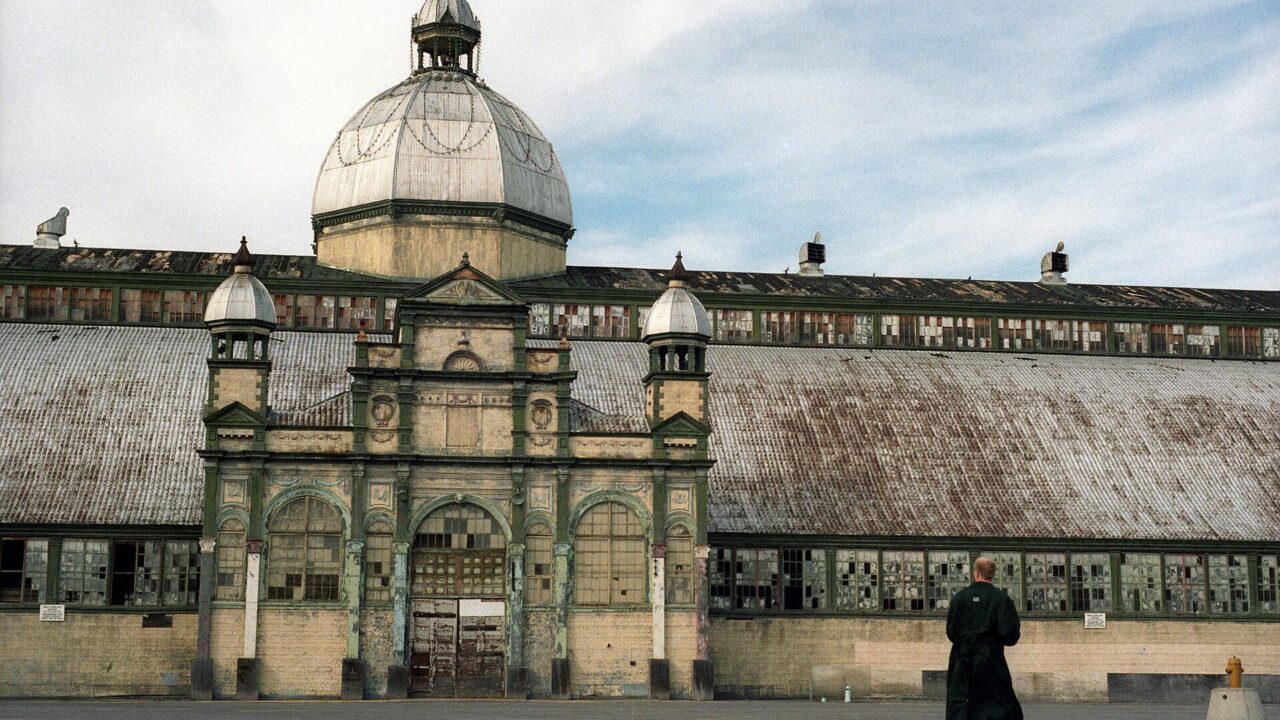
Lansdowne Park was home to the Central Canada Exhibition from 1888, CTV News Ottawa reported, and the Ottawa Rough Riders moved their games there, according to the Ontario Heritage Trust. The Aberdeen Pavilion dates from 1898 and is a National Historic Site. The City of Ottawa’s Lansdowne Park Timeline records a first redevelopment from November 2012 to August 2014. A second, Lansdowne 2.0, is under way.
Lansdowne Park history at a glance
| Year | Event | Source |
|---|---|---|
| 1868 | Year the land was acquired | Ontario Heritage Trust |
| 1888 | The Central Canada Exhibition is held at Lansdowne Park for the first time | CTV News Ottawa; Canadian Register of Historic Places |
| 1898 | The Aberdeen Pavilion is built | Parks Canada |
| 1914 | The Horticulture Building is completed | Canadian Register of Historic Places |
| 1925 | Lansdowne hosts its first Grey Cup game | Ontario Heritage Trust |
| 1967 | The arena is built; the Ottawa 67’s play their first game there on December 29 1967 | City of Ottawa; Ottawa 67’s |
| 1993 | The stadium is named Frank Clair Stadium on April 8 | Ottawa REDBLACKS; Canadian Football Hall of Fame |
| 1996 | The Rough Riders fold | Ottawa REDBLACKS |
| 2012 to 2014 | The first redevelopment: construction begins November 2012, the park reopens August 2014 | City of Ottawa |
| 2014 | The stadium and arena take the name TD Place | TD |
| 2025 | Lansdowne 2.0 preliminary works begin in December | City of Ottawa |
The Central Canada Exhibition era
The Ontario Heritage Trust’s Lansdowne Park page gives 1868 as the year the land was acquired.
The Central Canada Exhibition was founded in 1888, according to the Canadian Register of Historic Places, which describes it as Canada’s oldest agricultural fair in continuous operation. CTV News Ottawa reported that the exhibition, later called the SuperEx, was held at Lansdowne Park every year since 1888, except for a couple of years during the Second World War. CTV reported its last day at the park after a 122-year history in the capital. A later CTV News Ottawa report said the board cancelled the SuperEx for 2011.
An Ontario Heritage Trust conservation easement covers the Aberdeen Pavilion, the Horticulture Building, and the park and sightlines around them, the Trust says.
Read more: Exhibition and Entertainment at Lansdowne Park.
The Aberdeen Pavilion and the Horticulture Building
The Aberdeen Pavilion was erected in 1898 by the Dominion Bridge Company for the Central Canada Exhibition Association, to a design by Ottawa architect Moses C. Edey, according to Parks Canada. It is named for the Earl of Aberdeen, Governor General at the time, and is also known as the Cattle Castle. It was designated a National Historic Site of Canada on June 13 1983, as “the only large-scale exhibition building in Canada surviving from the 19th century.” The Ontario Heritage Trust says the pavilion served in winter as one of Ottawa’s earliest skating and hockey rinks.
A restoration of the pavilion began in 2026, the Glebe Report and CTV News Ottawa reported. Its scope and schedule are on the Lansdowne 2.0 page.
The Horticulture Building was completed in 1914, in time for that year’s exhibition, according to the Canadian Register of Historic Places. It was designed by Ottawa architect Francis C. Sullivan, and the Register calls it a fine Canadian example of the Prairie Style. It also served as a public curling rink in winter. The City recognized it under By-law 208-89. The Register says City Council voted to remove the designation in 1991 and the building was re-designated in 1994.
The building was moved from its original location in 2012, the City of Ottawa states in a 2014 notice filed on the Ontario Heritage Act Register. Council approved a notice of intention to designate it under Part IV of the Ontario Heritage Act on July 9 2014.
Heritage buildings
| Building | Built | Designer and builder | Protection |
|---|---|---|---|
| Aberdeen Pavilion | 1898 | Moses C. Edey, architect. Built by the Dominion Bridge Company | National Historic Site of Canada, June 13 1983 (Parks Canada). Ontario Heritage Trust conservation easement |
| Horticulture Building | 1914 | Francis C. Sullivan, architect | City of Ottawa By-law 208-89; removed 1991, re-designated 1994 (Canadian Register). Notice of intention to designate under Part IV of the Ontario Heritage Act, approved by Council July 9 2014 (City of Ottawa). Ontario Heritage Trust conservation easement |
Frank Clair Stadium and the Civic Centre
The Rough Riders moved their games to Lansdowne Park, according to the Ontario Heritage Trust, which does not give the year of the move. The Trust says Lansdowne hosted its first Grey Cup game in 1925. The 2017 Grey Cup was played at TD Place Stadium on November 26 2017, the CFL announced on July 31 2016.
The stadium was renamed Frank Clair Stadium on April 8 1993, according to the Ottawa REDBLACKS and the Canadian Football Hall of Fame. The Hall of Fame lists Clair as head coach of the Rough Riders from 1956 to 1969.
The arena was built in 1967, according to the City of Ottawa’s Lansdowne 2.0 questions and answers. The Ottawa 67’s played their first game in the Civic Centre on December 29 1967, a 4-2 loss to the Montreal Junior Canadiens, according to the team’s history page. The modern Ottawa Senators won the first game of their franchise, their home opener, 5-3 over the Montreal Canadiens at the Civic Centre on October 8 1992, CBC News recalled on October 12 2016.
On January 7 2014, TD announced that the stadium and arena would be called TD Place. The announcement said a monument would honour Frank Clair. The Event Centre now being built replaces the 1967 arena, according to the City.
Read more: City of Ottawa Civic Centre Arena. Read more: Lansdowne Park sports usage.
Teams that played here
| Team | Sport and league | At Lansdowne | Source |
|---|---|---|---|
| Ottawa Silver Sevens (as the Trust names them) | Hockey | Played and won the 1903-04 Stanley Cup final at Lansdowne | Ontario Heritage Trust |
| Ottawa Rough Riders | Football, CFL | Moved their games to Lansdowne (year not given by the source). Grey Cup wins in 1925, 1926, 1940, 1951, 1960, 1968, 1969, 1973 and 1976. Folded in 1996 | Ontario Heritage Trust; Ottawa REDBLACKS |
| Ottawa 67’s | Hockey, OHL | First Civic Centre game December 29 1967. Still at TD Place. Move into the Event Centre for 2028-29, as reported | Ottawa 67’s; 3DownNation, August 26 2026 |
| Ottawa Senators | Hockey, NHL | First game of the modern franchise, October 8 1992, at the Civic Centre | CBC News |
| Ottawa Renegades | Football, CFL | Joined in 2002 and played at Frank Clair Stadium. Folded after four seasons; disbanded in 2006 | Ottawa REDBLACKS; CBC; The Canadian Encyclopedia |
| Ottawa Fury FC | Soccer, NASL 2014 to 2016, USL 2017 to 2019 | Home games at TD Place stadium. Owners suspended operations for the 2020 season, CBC reported on November 8 2019 | CBC News, November 8 2019 |
| Ottawa Charge | Hockey, PWHL | Three seasons at TD Place. Play at Canadian Tire Centre from 2026-27 | PWHL, July 9 2026 |
The Rough Riders’ name was adopted in 1898 and the franchise folded in 1996, according to the REDBLACKS’ history page. The Canadian Encyclopedia says Ottawa had no CFL team from 1997 to 2002. The CFL returned as the Renegades in 2002, and the team folded after four seasons, the REDBLACKS’ page says. CBC reported in 2002 that the Renegades played at Frank Clair Stadium.
Ottawa Fury FC played in the North American Soccer League from 2014 to 2016 and moved to the USL in 2017, CBC News reported on November 8 2019. The club’s owners suspended operations for the 2020 season after it failed to obtain sanctioning from the bodies that govern the USL. CBC named OSEG as the club’s parent company.
The Ottawa Charge play at Canadian Tire Centre from the 2026-27 season, after three seasons at TD Place, the PWHL announced on July 9 2026.
Today’s teams: REDBLACKS, 67’s, Atlético Ottawa, Ottawa Rapid FC and Ottawa BlackJacks.
The first redevelopment, 2007 to 2014
The City’s timeline records each step.
- October 2007: the City starts a redevelopment of Lansdowne Park after cracks are found in the stadium.
- October 2008: OSEG proposes a revitalization partnership with the City.
- September 2009: staff and OSEG present the Lansdowne Partnership Plan.
- November 2009: Council approves the plan.
- June 2010: Council approves the plan’s implementation report.
- June 2011: the Ontario Municipal Board issues its Lansdowne decision.
- October 2012: Council approves the legal closing, and the City enters a 30-year partnership with OSEG.
- November 2012: construction begins.
- August 2014: construction is completed and the park reopens.
The CFL conditionally awarded an Ottawa franchise to OSEG in March 2008, according to the REDBLACKS’ history page. The REDBLACKS played their first home game on July 18 2014, against the Toronto Argonauts at TD Place.
Read more: Lansdowne Live and the Lansdowne Partnership Plan. Read more: the redevelopment project. Read more: development. Read more: the Lansdowne Park review. Read more: OSEG.
From the partnership to Lansdowne 2.0
The City’s timeline continues. In November 2019, a report to Council identified major financial challenges to the partnership. In December 2020, Council extended the partnership to 40 years and directed staff to look at its sustainability and financial viability. In June 2021, Council approved a framework for that work. In June 2022, Council approved the sustainability plan, directed a renegotiation of the partnership and asked staff to develop a concept plan with OSEG.
Lansdowne 2.0, the City’s current project, builds a new Event Centre, new north side stands and two residential towers, in three stages from the fourth quarter of 2025, according to the City. Timeline, budget and construction progress on the Lansdowne 2.0 page.
Sources
- City of Ottawa, Lansdowne Park Timeline: the first redevelopment and the partnership, October 2007 to June 2022. Read October 15 2026.
- City of Ottawa, Lansdowne 2.0 project page: the three stages. Read October 7 2026.
- City of Ottawa, Lansdowne 2.0 questions and answers: the arena’s 1967 construction and its replacement. Read October 15 2026.
- City of Ottawa, notice of intention to designate the Horticulture Building, filed on the Ontario Heritage Act Register: the 2012 move and the July 9 2014 Council decision. Cover letter dated July 21 2014. Read October 15 2026.
- Parks Canada, Directory of Federal Heritage Designations, Aberdeen Pavilion: construction, architect, builder, namesake, designation. Read October 8 2026.
- Canadian Register of Historic Places, Aberdeen Pavilion: confirms the 1898 date, architect, builder and 1983 designation. Read October 8 2026.
- Canadian Register of Historic Places, Horticulture Building: the 1914 date, architect, curling, designation history, the exhibition’s 1888 founding. Read October 8 2026.
- Ontario Heritage Trust, Lansdowne Park: 1868, the 1904 Stanley Cup final, the Rough Riders’ move and Grey Cup years, the 1925 Grey Cup, winter skating at the pavilion, the conservation easement. Undated. Read October 8 2026.
- CTV News Ottawa, SuperEx closes its gates: the exhibition at Lansdowne since 1888 and its last day there. Undated. Read October 8 2026.
- CTV News Ottawa, SuperEx cancelled for 2011: the 2011 cancellation. Undated. Read October 8 2026.
- Ottawa REDBLACKS, history: the Rough Riders’ name and folding, the 1993 renaming, the Renegades, the 2008 franchise award, the first home game in 2014. Read October 15 2026.
- Canadian Football Hall of Fame, Frank Clair: his coaching years and the 1993 renaming. Read October 8 2026.
- TD, January 7 2014: the TD Place name and the Frank Clair monument. Published January 7 2014. Read October 15 2026.
- CFL, July 31 2016: the 2017 Grey Cup at TD Place Stadium, November 26 2017. Read October 8 2026 (second check).
- Ottawa 67’s, history: the first Civic Centre game. Read October 7 2026.
- 3DownNation: the 67’s move to the Event Centre. Published August 26 2026.
- CBC News, Senators’ first game: October 8 1992. Published October 12 2016.
- CBC Sports, Ottawa returns to the CFL: the Renegades at Frank Clair Stadium. Published 2002, exact date not shown.
- The Canadian Encyclopedia, Ottawa Renegades: no CFL team 1997 to 2002, the Renegades disbanded in 2006. Last edited December 9 2016.
- CBC News, Fury owners suspend operations: Fury FC’s leagues, venue, owner and the suspension for the 2020 season. Published November 8 2019. Read October 15 2026.
- PWHL, July 9 2026: the Charge’s move after three seasons at TD Place. Published July 9 2026. Read October 15 2026.
- Glebe Report: the Aberdeen Pavilion restoration. Published August 14 2026.
- CTV News Ottawa: the restoration has started. Published October 3 2026.
ottawalansdownepark.com is an independent site. It is not affiliated with the City of Ottawa, OSEG, TD Place or any team. Disclaimer.